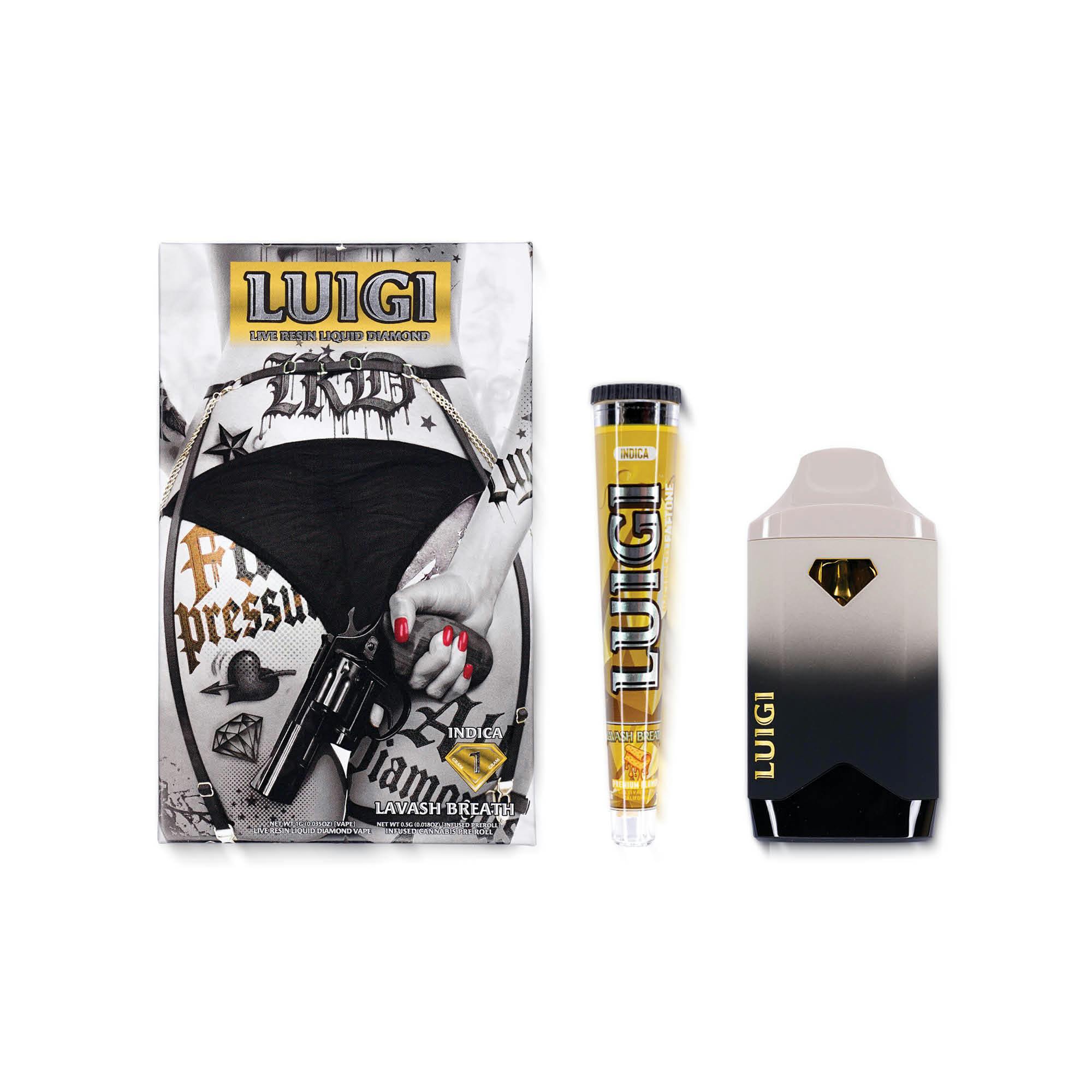
- *Buying cannabis products wholesale requires more than comparing unit prices. Licensed retailers need to verify suppliers, confirm regulatory documentation, maintain traceability, and ensure every product entering inventory complies with applicable cannabis laws. This guide explains the key considerations for dispensaries evaluating Luigi-branded cannabis products and other wholesale cannabis suppliers.**
## Understanding Cannabis Wholesale Purchasing
Wholesale cannabis purchasing is generally restricted to appropriately licensed businesses. Unlike ordinary consumer goods, regulated cannabis products move through controlled supply chains designed to document where products originated, how they were tested, and where they were ultimately sold.
For dispensary operators evaluating a brand such as Luigi Oil, the first priority should therefore be **supplier verification and regulatory compliance**, rather than simply finding the lowest wholesale price.
Before establishing a supplier relationship, retailers should determine:
- Whether the supplier is properly licensed
- Whether the products are authorized for sale in the relevant jurisdiction
- Whether required testing documentation is available
- Whether packaging and labeling meet applicable requirements
- How batch and lot information are tracked
- Whether invoices and transaction records can be maintained
- Whether the supplier can provide appropriate business documentation
Requirements vary considerably between jurisdictions, so retailers should verify current rules with the applicable cannabis regulator.
## What Dispensaries Should Verify Before Working With a Supplier
A professional wholesale relationship should begin with due diligence.
### 1. Verify Business Licensing
The first step is confirming that the supplier and every relevant party in the transaction holds the licenses required by the jurisdiction.
A retailer should obtain and independently verify applicable license information rather than relying solely on screenshots, social-media claims, or statements made by an unfamiliar salesperson.
Keep copies of relevant documentation with your purchasing records where required.
### 2. Confirm Product Authorization
A brand name alone does not establish that a particular product is legally marketable.
Retailers should confirm that the specific product, formulation, package size, and cannabinoid claims comply with local requirements.
This becomes especially important when a brand sells multiple product categories, because requirements can differ between cartridges, disposable devices, concentrates, pre-rolls, edibles, and other cannabis products.
### 3. Review Laboratory Documentation
Regulated cannabis products generally require testing before entering the legal retail supply chain.
Depending on jurisdiction, documentation may address:
- Cannabinoid concentrations
- Contaminants
- Pesticides
- Heavy metals
- Microbial contamination
- Residual solvents
- Mycotoxins
- Other jurisdiction-specific requirements
Retailers should ensure that laboratory documentation corresponds to the **actual batch or lot being received**, rather than relying on a generic certificate from an unrelated production run.
## Understanding Batch and Lot Traceability
Traceability is one of the most important parts of cannabis inventory management.
A retailer should be able to determine:
- *Supplier → Product → Batch/Lot → Testing → Shipment → Retail Inventory**
If a regulatory issue or product recall occurs, accurate records allow affected inventory to be identified quickly.
When receiving inventory, compare the information on the physical packaging against the accompanying documentation and purchasing records.
Important information may include:
- Batch or lot number
- Manufacturing or production date
- Packaging date
- Expiration or recommended-use information where applicable
- Testing information
- License information
- Track-and-trace identifiers
- Product quantity
Exact requirements depend on the jurisdiction.
## Evaluating Cannabis Product Categories
Wholesale buyers often evaluate several categories simultaneously. Rather than assuming one product type will outperform another everywhere, retailers should analyze their own customer base and historical sales data.
### Disposable Vape Products
Disposable products may appeal to customers seeking a ready-to-use format. Retailers should evaluate packaging compliance, device specifications, cannabinoid labeling, battery information where applicable, and storage requirements.
### Cartridge Products
Cartridges require particular attention to hardware compatibility, packaging, labeling, testing documentation, and ingredient disclosures where required.
### Pre-Rolls
Pre-roll inventory should be evaluated according to flower quality, package configuration, cannabinoid labeling, testing documentation, freshness, and applicable packaging standards.
### Concentrates
Concentrates can have different handling, labeling, packaging, and testing requirements from flower or pre-rolls. Retailers should confirm the product category is properly documented before accepting inventory.
## How to Evaluate a Wholesale Supplier
Price is only one component of supplier evaluation.
A useful supplier scorecard can include:
| Evaluation Area | What to Check |
| --------------------- | ---------------------------------------- |
| Licensing | Valid regulatory authorization |
| Product documentation | Complete and current records |
| Testing | Batch-specific laboratory documentation |
| Traceability | Lot and track-and-trace information |
| Packaging | Jurisdiction-compliant packaging |
| Labeling | Accurate required disclosures |
| Reliability | Consistent fulfillment and communication |
| Inventory | Appropriate availability and shelf life |
| Returns | Clearly documented procedures |
| Compliance support | Ability to provide required records |
A supplier offering a lower price may not represent better value if documentation is incomplete or inventory creates compliance problems.
## Authenticity and Counterfeit Prevention
Counterfeit cannabis products can create significant regulatory and reputational risks for dispensaries.
Retailers should establish an internal receiving procedure rather than relying on visual inspection alone.
When inventory arrives, staff can compare:
1. Brand and product name
2. Package design
3. Batch or lot information
4. Required regulatory markings
5. Laboratory documentation
6. Track-and-trace information
7. Supplier invoice
8. Quantity received
Unexpected discrepancies should be investigated before the products are placed into sellable inventory.
Particular caution is warranted when products are offered through unauthorized intermediaries or channels that cannot provide verifiable licensing and documentation.
## Why Secondary Sourcing Requires Extra Due Diligence
Retailers sometimes encounter products through brokers, resellers, or other secondary channels.
A secondary supplier should not automatically be treated as legitimate simply because the products appear authentic.
Before accepting inventory, determine:
- Who legally owns the inventory
- Which licensed entity is supplying it
- Whether the transfer is permitted
- Whether the products remain traceable
- Whether testing documentation matches the inventory
- Whether invoices accurately identify the transaction
- Whether the transaction complies with local transfer rules
If any part of the supply chain cannot be verified, the safest approach is to pause the transaction and obtain clarification.
## Inventory Planning for Dispensaries
Once a retailer has established a compliant supplier relationship, inventory planning becomes the next consideration.
Rather than purchasing large quantities solely because a product has a favorable wholesale price, retailers should examine:
- Historical sell-through
- Average days of inventory
- Customer demand
- Product category performance
- Seasonal changes
- Expiration or freshness considerations
- Available storage capacity
- Capital tied up in inventory
A simple inventory review can identify which products deserve additional shelf space and which products should be ordered more cautiously.
## Questions to Ask a Wholesale Supplier
Before establishing a relationship, dispensary purchasing teams can ask:
### Licensing
- *What licenses authorize your business to distribute these products?**
### Testing
- *Can you provide batch-specific testing documentation?**
### Traceability
- *How are products tracked through the supply chain?**
### Packaging
- *Are the products packaged and labeled for our jurisdiction?**
### Documentation
- *What records accompany each shipment?**
### Product Changes
- *How are formulation, packaging, or product-line changes communicated to retailers?**
### Recalls
- *What is your procedure if a batch is recalled or placed on hold?**
### Returns
- *What happens when inventory arrives damaged, incorrect, or noncompliant?**
These questions help distinguish a properly documented supplier relationship from a transaction based primarily on price.
## Common Wholesale Purchasing Mistakes
### Choosing Price Over Compliance
The lowest quoted unit cost is not necessarily the lowest overall cost. Noncompliant inventory can result in operational disruption, disposal costs, regulatory problems, or reputational damage.
### Accepting Generic Testing Documents
Testing documents should correspond to the products and batches actually being received.
### Failing to Inspect Incoming Inventory
Receiving staff should verify shipments before inventory reaches the sales floor.
### Ignoring Storage Requirements
Cannabis products can be affected by heat, light, humidity, and improper handling. Follow the manufacturer's and regulator's applicable storage requirements.
### Purchasing More Inventory Than the Store Can Move
Large orders can tie up capital and create unnecessary inventory risk.
### Relying on Unverified Online Sellers
A professional wholesale relationship should have verifiable business credentials and appropriate documentation.
## FAQ
### How do dispensaries evaluate cannabis wholesale suppliers?
Dispensaries should evaluate licensing, product authorization, testing documentation, traceability, packaging, labeling, reliability, inventory quality, and applicable transfer requirements.
### What documentation should accompany wholesale cannabis products?
Documentation varies by jurisdiction but may include invoices, license information, batch or lot identifiers, laboratory testing information, track-and-trace records, and required product documentation.
### How can a retailer reduce counterfeit risk?
Purchase through verifiable licensed supply channels, inspect incoming inventory, compare batch information with documentation, and maintain complete receiving records.
### Should a dispensary buy based only on wholesale price?
No. Pricing should be considered alongside compliance, testing, inventory turnover, documentation quality, supplier reliability, and the retailer's actual customer demand.
### What should retailers do if product documentation does not match the shipment?
The inventory should be held from sale while the discrepancy is investigated. Retailers should contact the appropriate supplier and, where required, their regulatory authority.
### Do cannabis wholesale requirements vary by location?
Yes. Cannabis licensing, distribution, testing, packaging, labeling, transportation, and track-and-trace rules can differ significantly between jurisdictions.
## Final Takeaway
For dispensaries evaluating Luigi-branded cannabis products or any other regulated cannabis supplier, **due diligence should come before purchasing decisions**.
Verify the supplier's authorization, confirm product documentation, match testing information to the relevant batches, inspect incoming inventory, maintain traceability records, and ensure every transaction complies with the rules governing your jurisdiction.
A strong wholesale relationship is ultimately about more than obtaining inventory. It is about maintaining a **verifiable, documented, and compliant supply chain** from licensed supplier to licensed retailer.
Additional Buying and Product-Research Considerations
When comparing current products, use the package and batch-specific laboratory documentation as the primary reference. Product names, flavors, formats, potency, availability, packaging, and retailer inventory can change over time. Compare like-for-like products by format, net weight, cannabinoid results, terpene information, extraction method, packaging date, storage conditions, and final price. Purchase only through licensed channels where cannabis is legal, follow the product label, keep products away from children and pets, and stop using a product that appears damaged, contaminated, or inconsistent with its packaging.
A careful record of the retailer, purchase date, batch or lot number, and product format can make future comparisons easier and can help resolve questions with the retailer or manufacturer. Avoid treating a general online description as a permanent specification for every batch. The most reliable product decision is the one grounded in current documentation, legal sourcing, appropriate storage, and the consumer priorities described throughout this guide.
Additional Product Evaluation Notes
A useful way to evaluate any product in this category is to separate confirmed information from assumptions. Start with the current package, the retailer listing, and batch-specific laboratory documentation. Product names and marketing language can describe a general category, but they do not replace the details printed on the item being considered. Check the product format, net weight, cannabinoid panel, terpene information, extraction description, package date, lot number, and required warnings. If any of those details conflict, ask the retailer or manufacturer for clarification before purchasing or using the product.
Storage and handling are also part of product quality. Keep packaged products in the environment recommended on the label, away from excessive heat, direct sunlight, moisture, children, and pets. Do not open, refill, modify, or repair a disposable device. If a product leaks, has a persistent burnt taste, appears tampered with, or does not match its packaging, stop using it and retain the package and receipt so the issue can be investigated.
Comparisons are most useful when they use the same standard for every product. Compare equivalent quantities instead of only shelf prices, and consider taxes, delivery fees, availability, freshness, packaging condition, and the quality of the information supplied by the retailer. A higher percentage or a lower price is not automatically a better value if the batch cannot be documented or the product is not the format you intended to buy.
Availability can change quickly between batches and retailers. A product shown in an old article, photograph, menu, or social post may not represent current stock. Confirm that the retailer is licensed where required, verify the current menu, and inspect the actual package at purchase. Keep a record of the product name, batch or lot number, purchase date, and retailer. This makes future comparisons more accurate and gives you useful information if you need to contact customer support.
Adults who are legally permitted to use cannabis should follow local laws and the product label. Do not drive or operate equipment after consuming an intoxicating product, and avoid combining cannabis with alcohol or other intoxicating substances. If you experience severe or concerning symptoms, stop using the product and seek appropriate medical care.